Beyond the Response Form: Seven Human-Rights Tests for Britain’s Public Consultations in 2026
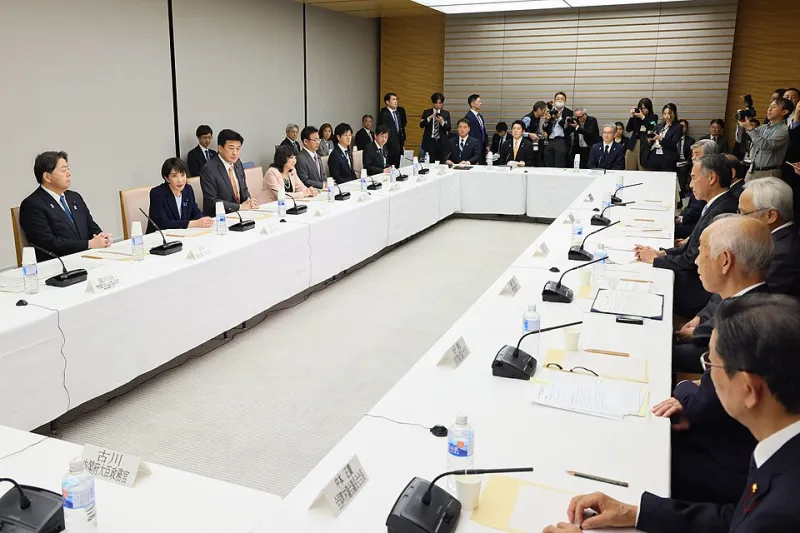
Photo: 内閣広報室|Cabinet Public Affairs Office, CC BY 4.0, via Wikimedia Commons
Public consultations are the connective tissue of democratic decision-making. They are where a tenant in Salford, a parent in Cardiff or a parish councillor in Norfolk is invited to shape the rules that govern planning, policing, health and local services. Yet the invitation is often thinner than it appears. In 2026, as Westminster and town halls press ahead with the Planning Bill, the Protest Policing Bill and a range of service redesigns, the question is not whether consultations happen but whether they amount to a hearing. The Oxford Amnesty Lectures archive has long insisted that rights are not abstract; they are exercised in rooms, on forms and at deadlines. This guide sets out seven tests for activists and residents who want to know whether a consultation is real, when to engage with it, and when to challenge it.
Why Consultations Are a Human-Rights Question
Participation is not a courtesy. It is a right with roots in Article 25 of the International Covenant on Civil and Political Rights, which protects the right to take part in the conduct of public affairs. In the UK, that principle is felt most acutely at the local level: in a planning decision that determines whether a family can stay in their neighbourhood, in a policing policy that decides how a protest is policed, in a health reconfiguration that moves services beyond reach. A consultation that is designed to fail is not neutral. It legitimises a decision that has already been taken and exhausts the people who try to contest it.
The Oxford Amnesty Lectures have always treated the lecture theatre as a place where rights are examined rather than merely celebrated. The same discipline should apply to the consultation exercise. An Amnesty-style audit does not ask whether the consultation was well intentioned. It asks whether it was capable of changing the outcome.
The First Test: Is the Timetable Proportionate and Announced in Advance?
A consultation that opens on Friday and closes on Monday is not a consultation. The first test is temporal: was the period long enough for affected people to organise, read the evidence and respond? Was it announced through channels that reach beyond the usual mailing list? In 2026, several councils have run service reviews over the summer holidays, when parents and teachers are least able to respond. A genuine timetable is proportionate to the complexity of the decision and published before the process begins, not discovered on a council website three weeks into a six-week window.
The Second Test: Is the Evidence Base Published?
You cannot meaningfully respond to a proposal you cannot see. Test two asks whether the consultation publishes the data, assumptions and options appraisal behind the preferred route. Too often, residents are invited to comment on a single preferred option while alternatives remain undisclosed. That is not consultation; it is ratification. The Planning Bill debates of 2026 have shown how important it is to scrutinise the evidence base before decisions crystallise. If the council or department will not publish its workings, the consultation is already tilted.
The Third Test: Is Accessibility Real, Not Rhetorical?
Accessibility is not a tick-box about wheelchair ramps. It includes easy-read versions, British Sign Language interpretation, translation into community languages, accessible online forms and face-to-face sessions at times that working people can attend. A consultation that exists only as a PDF on a council website excludes older residents, disabled people and those without reliable broadband. The test is whether the consultation meets people where they are, including in community centres, libraries and faith venues, and whether it budgets for that outreach rather than treating it as an afterthought.
The Fourth Test: Who Is at the Table?
Consultation is not a referendum of the loudest voices. Test four asks who has been actively invited and who has been structurally excluded. Residents’ associations, trade unions, disabled people’s organisations and racial justice groups should be engaged before the formal window opens. If the only voices in the room are developers, consultants and councillors, the process has been captured. An Amnesty-style audit would ask for the stakeholder map and the equality impact assessment, and would check whether both were produced before the decision, not after it.
The Fifth Test: Does the Consultation Happen Before the Decision Is Locked?
A consultation held after a contract has been signed or a planning committee has approved the principle is not a consultation. It is a communication exercise. Test five is about sequencing: were respondents able to influence the options, or only to comment on the implementation of a decision already made? The 2026 planning reforms and local service redesigns have repeatedly raised this question. If the decision-makers cannot point to a moment when the consultation could have changed the outcome, the process fails the test.
The Sixth Test: Will Feedback Be Published With Reasons?
A genuine consultation tells respondents what happened to their views. Test six asks whether the organisation will publish a response document that summarises the submissions, explains how they were considered and gives reasons for the decisions taken. A consultation that ends with silence teaches people that participation is futile. The Oxford Amnesty Lectures archive is full of warnings about institutions that listen without hearing. Feedback is the proof of hearing.
The Seventh Test: Is There a Route to Challenge?
Finally, test seven asks whether the consultation has legal weight and whether there is a route to challenge a flawed process. In planning, judicial review remains a vital backstop; in policing, the Human Rights Act provides a framework for challenging disproportionate restrictions on assembly. Residents should know whether the consultation is statutory or discretionary, and what remedies exist if the process is manifestly unfair. A consultation that cannot be challenged is a consultation that can afford to ignore you.
Using the Audit
Activists can score each test from zero to two: zero where the requirement is absent, one where it is partial, two where it is met. A total below seven suggests a process that should be challenged rather than merely completed. A score above ten suggests a consultation worth engaging with seriously. The point is not to produce a perfect scorecard but to shift the burden of proof. Councils and Whitehall departments should have to demonstrate that a consultation was capable of changing their minds.
In 2026, the risk is not that consultations disappear. It is that they multiply as paperwork while participation shrinks. The seven tests are a modest tool for a larger task: insisting that public decisions are made with the public, not merely announced to them. That is the standard the Oxford Amnesty Lectures have always set, and it is the standard residents should bring to every response form that lands on their doormat.