The Ramp Is Not the Room: Seven Accessibility Tests for Britain’s Human-Rights Events in 2026
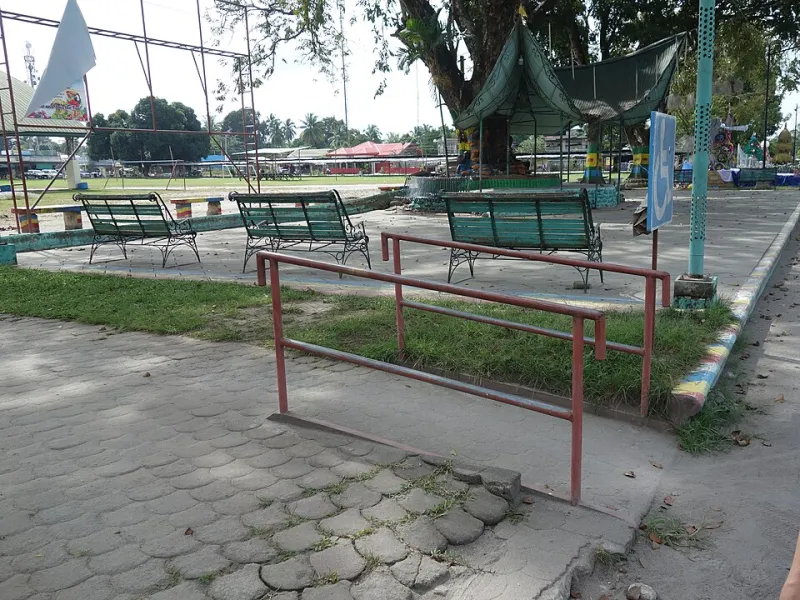
Photo: Tdorante10, CC BY-SA 4.0, via Wikimedia Commons
Britain’s public lecture circuit is one of its quieter democratic institutions. A town hall meeting on asylum, a university seminar on protest policing, a library talk on welfare rights: each depends on the idea that anyone with an argument can enter the room, take the floor and be heard. That idea is weaker than it looks. For disabled people, the barriers often begin at the station, continue through the venue’s back entrance and end with a recording that nobody captioned. The Oxford Amnesty Lectures were built on the conviction that human rights are argued into existence in public. In 2026, that argument has to include the conditions of entry.
The legal floor is well established. The Equality Act 2010 requires organisations to make reasonable adjustments and, crucially, to think ahead rather than wait for a complaint. The British Sign Language Act 2022 gave BSL a clearer statutory footing in public communications. Yet the gap between statute and practice remains wide, particularly in the voluntary and campaign sector where budgets are tight and events are often organised by small teams. Accessibility is not a courtesy added at the end of the checklist. It is part of what makes an event a rights event at all.
1. Audit the whole journey, not the front door
A step-free entrance is necessary but not sufficient. The test is whether a wheelchair user can travel from the nearest bus stop or station to the seat, the platform and the toilet without asking a stranger for help. Venues should publish a journey description, not just an access statement: gradients, dropped kerbs, door widths, lift dimensions and the location of accessible toilets. Event organisers should visit in person, ideally with disabled advisers, and walk the route. A ramp at the side entrance that leads to a locked corridor is not access; it is a detour with extra steps.
2. Book BSL interpreters as a scheduled language, not a favour
British Sign Language provision is too often treated as an emergency measure triggered by a request. In practice, good BSL access means booking qualified interpreters early, confirming their working conditions and publishing the commitment on the event page. For panel events, two interpreters may be needed to avoid fatigue. For smaller meetings, remote interpreting can work, but only where the video platform and the room’s sightlines support it. Deaf audience members should not have to disclose their needs to a generic inbox and wait for a provisional answer. A rights event that schedules interpretation as an afterthought is telling part of its audience that their participation is optional.
3. Treat captioning as part of the record
Live captioning serves Deaf, deafened and hard-of-hearing audiences, but it also strengthens the public record. Speeches become searchable, quotable and reusable in campaign materials. Organisers should budget for live captions at major public events and ensure that recordings carry accurate captions before they are uploaded. Automatic captions can be a starting point, not the finished article: names, legal terms and campaign vocabulary are routinely mangled. Where an event is streamed, captions should be visible in the room and online. The test is simple: can someone who cannot hear the speaker follow the argument without relying on a summary written by someone else?
4. Provide quiet rooms and sensory safety
Not every barrier is visible. Neurodivergent audience members, people with anxiety conditions and those recovering from trauma may need a low-stimulus space before, during or after an event. A quiet room should be genuinely quiet, clearly signposted and not a storage cupboard with a chair in it. Organisers should publish a schedule with break times, avoid surprise loud music and flash lighting, and brief stewards on how to support someone who needs to leave the room without being questioned. Sensory access is part of political access: people cannot exercise their right to assemble if the assembly is unbearable.
5. Price the hidden costs of attendance
Free tickets are not the same as free participation. Travel, childcare, personal assistance and time off work can make a supposedly open event inaccessible. Campaign groups should consider accessible travel bursaries, paid carer tickets and assistance with Access to Work paperwork where relevant. Universities should not assume that a student audience can absorb extra costs. Councils should review whether venue hire charges are pushing community groups towards inaccessible rooms. A ticket price is only one number in the ledger. The human-rights test is whether someone on a low income, with additional needs, can realistically attend without subsidising the event themselves.
6. Make hybrid participation real, not decorative
Hybrid events often fail because the online audience is treated as a passive viewer. Genuine hybrid participation means a chair who takes remote questions, a microphone strategy that lets the room and the stream hear each other, and a moderator who is not also running the tech desk. Organisers should test the platform in advance, share materials in accessible formats and record the session with captions. For disabled speakers, hybrid delivery can remove travel barriers; for disabled audience members, it can be the difference between attendance and exclusion. The test is whether an online participant can ask a question and receive an answer in the same event, not a follow-up email three days later.
7. Pay disabled people to help design the room
Accessibility is too often outsourced to a volunteer or a last-minute adviser. A more credible model is to commission disabled consultants and disabled-led organisations to review the venue, the programme and the communications plan, and to pay them for that work. Co-design is not a focus group bolted onto the end of planning. It is a way of catching problems before they become exclusions. Universities and councils already hold access expertise within their disabled staff networks and local disability forums; the question is whether they are resourced and listened to. Campaign groups should build access costs into funding bids from the outset.
The podium is only as open as the room
Free expression is not simply the absence of a ban. It is the presence of conditions in which people can speak, listen, disagree and organise. A lecture series that platform controversial speakers but cannot seat a disabled audience member has defended one freedom while quietly narrowing another. In 2026, the test for Britain’s public rooms is not whether they have an access statement. It is whether the statement describes a place where rights are actually exercised. Organisers should publish their accessibility commitments, invite scrutiny and treat every barrier identified as a political problem rather than a logistical inconvenience. The ramp is not the room. The room is the argument.