After the Applause: Seven Standards for Fair Questioning at Human-Rights Events in 2026
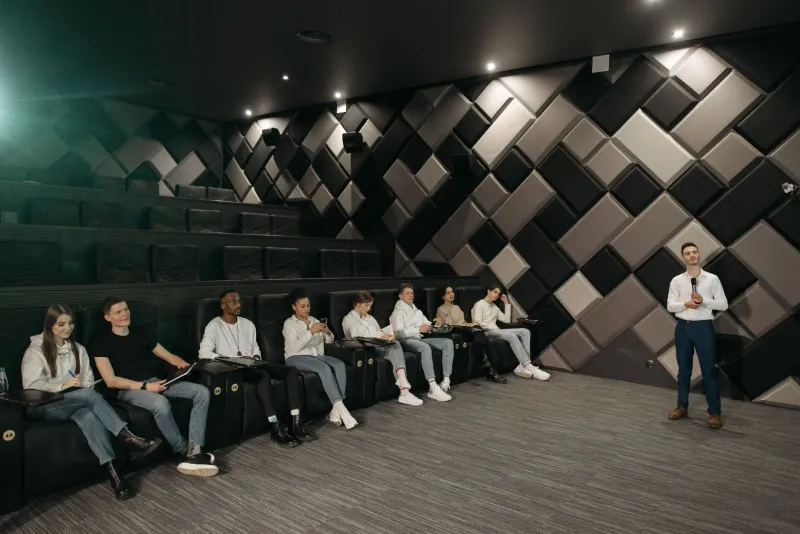
The lecture has ended, the applause has faded, and the chair invites questions. It is the moment when a human-rights event stops being a performance and becomes a negotiation over who is heard. Yet while platforms, panels and speakers are scrutinised in advance, the mechanics of audience questioning are rarely examined. Who is called? How are questions filtered? When does a planted question become a form of manipulation? And what happens to the words of an attendee once they have been spoken into a roving microphone?
For an organisation rooted in the Oxford Amnesty Lectures tradition, these are not procedural trivia. They are questions of rights. The archive's own record of past events shows how often the same tensions recur: a queue that favours the confident, a chair who mistakes control for fairness, a room that applauds a hostile intervention and then forgets the person who made it. In 2026, with public trust in institutions under strain, the Q&A is a test of whether human-rights talk is matched by human-rights practice.
1. Publish the route to the microphone
Audiences cannot trust a process they cannot see. Organisers should state in advance how questions will be taken: hands raised, cards submitted, a digital queue, or a combination. If cards are selected, say who selects them and on what basis. If a chair will exercise discretion, acknowledge that discretion rather than presenting it as neutrality. The standard is not bureaucratic uniformity; it is predictability. A published route reduces the power of the confident insider and gives first-time attendees a fair chance to participate.
2. Treat time as a rights resource
Every minute allocated to a platform guest is a minute denied to the floor. Chairs should publish a rough time budget: how long speakers have, how long the Q&A will last, and whether follow-ups are permitted. They should resist the temptation to let a favourite interlocutor dominate. The archive's event records suggest that the most common complaint is not hostility but asymmetry: three questions from one voice, none from the back of the hall. A simple rule — no second question until every raised hand has been acknowledged — is not rigid; it is reparative.
3. Make screening transparent and minimal
Screening is sometimes necessary: to filter abuse, to prevent repetition, to ensure a range of topics. But screening becomes censorship when it is invisible. Organisers should distinguish between procedural filtering (for example, removing duplicate questions) and substantive filtering (excluding viewpoints). If a question is declined, the chair should say so and, where possible, explain why. A short published note after the event — 'questions on X were held over for time' — is better than silence. Transparency does not guarantee agreement, but it protects the legitimacy of the process.
4. Beware the planted question
A question from the floor carries an implicit claim: that it comes from the audience, not from the platform. When organisers or speakers arrange questions in advance without disclosure, they borrow that claim dishonestly. Planted questions can be useful for managing time, but they corrode trust when they masquerade as spontaneous. The standard is disclosure: if a question has been solicited or supplied, the chair should say so. In human-rights settings, where credibility is the currency, the appearance of a stacked room can undo an hour of careful argument.
5. Do not confuse hostility with illegitimacy
Human-rights events attract disagreement, and sometimes anger. A chair's duty is not to protect speakers from discomfort but to protect the conditions of speech. Hostile questions should be heard if they are questions; abuse, threats or persistent interruption are different. The chair should intervene against conduct, not against viewpoint, and should do so consistently. The archive shows that audiences remember double standards — the questioner silenced for tone while a platform guest is allowed to hector. Consistency is the chair's most valuable asset.
6. Record the room, with consent and care
Many events are recorded, streamed or transcribed. Audience contributions are part of the record, and that has consequences. Organisers should tell attendees at the outset whether the Q&A is being recorded, how it will be used, and how they can opt out. A person asking a question about their own experience of detention or discrimination may not expect their words to circulate indefinitely. Consent should be specific, not buried in a ticket condition. Where possible, offer a non-recorded space for questions that require it.
7. Design access beyond the queue
A roving microphone assumes mobility, confidence and time. It excludes people with disabilities, carers, people who use English as a second language, and those who cannot stand in a queue. Fair questioning requires multiple routes: written cards, a digital form, a quiet room, a British Sign Language interpreter for the Q&A as well as the lecture. Access is not an add-on to fairness; it is the test of whether the event was designed for the public it claims to serve. The archive's accessibility guides make the same point in other contexts: the ramp is not the room.
A short checklist for organisers and chairs
Before the next Oxford Amnesty Lecture, or any human-rights gathering, ask:
- Have we published how questions will be taken and selected?
- Is the time budget for the floor explicit and protected?
- Can we explain any declined question without revealing personal details?
- Are any pre-arranged questions disclosed as such?
- Does the chair have a consistent conduct policy, not a viewpoint policy?
- Is recording of the Q&A clearly announced, with an opt-out?
- Are there at least two accessible routes to ask a question?
The Q&A is not a footnote to the lecture. It is the moment when a room decides whether it is a forum or a stage. In 2026, human-rights organisations should hold themselves to the standards they demand of others: transparency, equality of access, and respect for the speaker who has waited patiently at the back of the hall.