The Warning Was Filed: Reading the Oxford Amnesty Archive in 2026

Photo: Garden Sprite, CC0, via Wikimedia Commons
There is a habit, when anniversaries accumulate, of treating an archive as a monument. The Oxford Amnesty Lectures have been running since 1992, and the temptation is to read the older transcripts as a record of battles won, causes since absorbed into common sense, speakers now honoured in retrospect. That reading is a disservice. Read consecutively rather than selectively, the lectures do not describe a settled settlement. They describe a series of warnings, issued politely, in public, and then largely ignored.
That is the argument of this essay: the archive is not a memorial but an instrument. Its value in 2026 lies less in what it commemorates than in what it predicted.
A series built for the long argument
From its first years the lecture series was designed around a provocation rather than a theme — a single question about rights, put to a speaker with no obligation to be comfortable. The published volumes that followed were not campaign literature. They were essays of considerable length, arguing about universality, about the limits of humanitarian sentiment, about whether rights language could survive contact with markets. That format has proved unusually durable. A lecture given in the mid-1990s about the drift of executive power does not read as archaic in 2026; it reads as a description.
Theme one: the slow closing of civic space
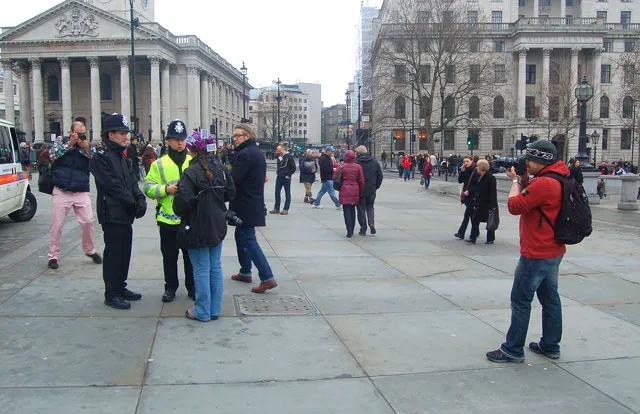
Return to the archive's treatments of assembly, association and protest and a consistent warning emerges: that restrictions on civic space rarely arrive as a ban. They arrive as conditions, as permit regimes, as buffer zones, as the discretionary judgement of a senior officer at four in the afternoon.
Test that warning against the present. The 2026 Protest Policing Bill has moved precisely in this direction, extending the terrain on which conditions may be imposed and enlarging the discretion of the officer on the ground. Nobody has outlawed protest. The archive never suggested anyone would.
Theme two: surveillance normalised in instalments
Listen for the lectures on privacy and you will hear an argument that has aged badly in the best way — that surveillance is rarely extended by a single decisive statute, but by accretion: a camera here, a data-sharing agreement there, an algorithm introduced under a procurement notice rather than a debate.
The accretion is now visible in the everyday machinery of British public services: facial recognition at events and on high streets, automated triage in benefits administration, predictive tools in children's services introduced with the best of intentions and evaluated with the least of resources. The archive's insistence on the individual case — on what a database does to one person's life — remains the right corrective to a policy debate conducted entirely in aggregate.
Theme three: economic rights as an afterthought
The lectures returned, with a regularity that now looks like persistence, to the proposition that civil and political rights cannot be sustained without material security: housing, income, a functioning local state. This was contested at the time as a category error. It looks, in 2026, like a description of the country.
When a council issues a section 114 notice, when temporary accommodation is procured hundreds of miles from a family's school, when the care system contracts to the point of failure, the harm is not abstract. It is a rights harm with a postcode. The archive's economic-rights lectures supplied the analytical vocabulary for this long before the current crisis made it unavoidable.
Theme four: migrant justice as the test case
The most uncomfortable lectures in the series are those on immigration, detention and asylum. They made a structural point that is easy to state and hard to resist: that the treatment of non-citizens is the clearest available index of a state's commitment to rights, because it is the one area where the political cost of cruelty is lowest.
In 2026 that index reads badly. Contingency accommodation, dispersal, the outsourcing of welfare functions to contractors, the routine use of the language of crisis to license exceptional measures — each was named in these lectures years before it became an operational norm.
Testing the warnings against the present
The exercise is not to award the archive the satisfaction of having been right. It is to ask what the warnings imply for campaigning now. Three implications follow.
First, that the most important rights questions in Britain are increasingly administrative. They are settled in procurement documents, data protection impact assessments and equality analyses rather than in white papers. Campaigners who want an early view must read the paperwork.
Second, that the test case matters more than the general principle. The archive's best lectures always worked from a single life, meticulously documented. That method remains the most persuasive form of argument available to us.
Third, that institutional memory is a campaign resource. A warning recorded in 1998 and ignored is not an embarrassment. It is evidence of a pattern, and patterns are what tribunals, inspectors and select committees respond to.
Not a monument
An archive that is only admired will fail. The lectures collected on this site were delivered as arguments addressed to a public, and they retain their force only if they are used as such: cited in submissions, quoted in scrutiny meetings, handed to a new councillor who has just discovered what the budget does to the equality duty.
The three decades of transcripts do not tell us that Britain's rights blind spots were unforeseeable. They tell us they were foreseen, described, published — and left to accumulate. The task in 2026 is not to commemorate the warnings. It is to act on them before the next volume is written.