What the Shredder Decides: Seven Retention Questions Before the Record Goes
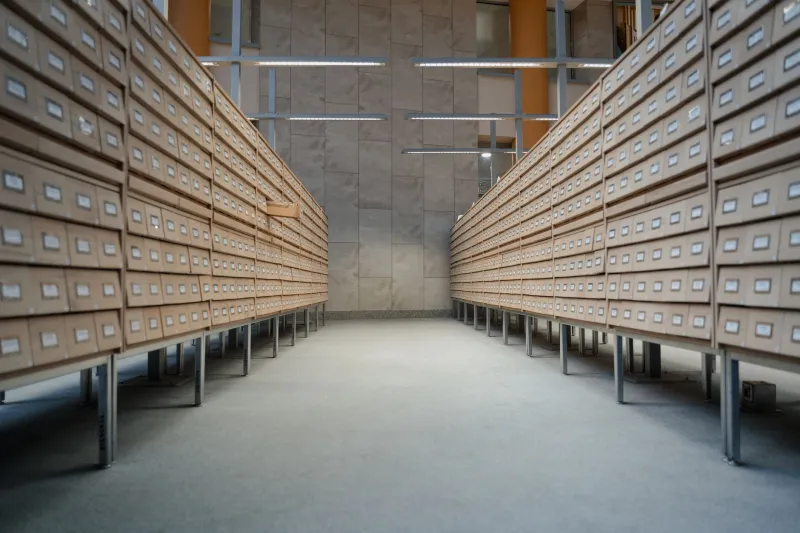
Every human-rights claim rests on a paper spine. A case note, a meeting minute, an email chain, a draft finding: these are not administrative debris. They are the evidence that later allows a person to show what an institution knew, when it knew it, and what it chose to do. When that material is routinely destroyed, the claim does not always fail loudly. It often fails quietly, years later, for want of proof.
Retention is therefore not a back-office matter. It is a human-rights infrastructure. A disposal schedule decides what a public body will be able to remember; a deletion policy decides what it will be able to deny. Across UK councils, police forces, NHS bodies and inquiry teams in 2026, the rules are varied, often technical, and rarely designed with the future claimant in mind.
The point is not that all records should be kept forever. Proportionality matters, and so does privacy. But there is a difference between lawful, considered disposal and a quiet clear-out that leaves the written trace thinner than the public interest requires. Campaigners should ask before the record goes.
1. What is the disposal schedule, and when was it last reviewed?
Ask for the information asset register and the retention schedule that sits behind it. Which categories of record are held, for how long, and under whose authority? A schedule that has not been reviewed since a service was outsourced, reorganised or moved onto a new case-management system may no longer describe what is actually kept. The gap between the policy and the system is where records disappear.
2. Who decides that a record is “transitory”?
Many deletion regimes turn on labels: transitory, duplicate, draft, ephemeral, personal convenience. These are not neutral descriptions. They are judgments about future value, made by the same institution whose conduct may later be examined. Ask for the criteria, the examples in staff guidance, and the role of any records manager in approving disposal. If “transitory” is doing heavy lifting, the public should see the weights.
3. Where do informal channels sit?
A council may keep its formal case file while the decisive exchange happens on a messaging platform, a shared drive or a mobile phone. NHS bodies are not immune; nor are police teams. Ask whether messages, notes and collaboration tools are captured as records, and who is responsible for capture. A policy that declares a channel “not a record” does not make it irrelevant to a later complaint. It simply makes the record harder to obtain.
4. What triggers a legal hold?
A legal hold should begin when litigation, an inquiry or a formal complaint is reasonably foreseeable, not when proceedings are issued. Ask who recognises the trigger, how staff flag a dispute, and whether front-line teams receive training. If holds depend on a single overstretched officer or a manual email, the risk is structural. A hold that arrives after the monthly disposal run has already done its work is no hold at all.
5. Are interim findings and draft reports protected?
Inquiries and reviews often retain final reports while clearing working papers. But drafts can reveal the reasoning that a final text smooths away: what was known, what was discounted, what was added late. Ask for version control, retention of interim findings, and rules on destroying drafts once a report is published. The right to truth is poorly served by an archive that keeps only the polished conclusion.
6. What does the destruction log actually record?
A deletion that leaves no trace cannot be audited. Ask for disposal logs, certificates of destruction, and audit trails showing what was destroyed, when, by whom and under which schedule. Volume matters too: a sudden clear-out of a category shortly before an inspection or a request is a fact worth knowing. If the body cannot produce a log, ask how it would ever know whether its own policy had been followed.
7. What redress exists when records go early?
Ask what happens if material is destroyed during a Freedom of Information request, a complaint or an anticipated inquiry. The Freedom of Information Act contains an offence relating to the alteration or destruction of records after a request has been made; regulators and courts have other powers. But campaigners need to know the internal route as well: who investigates, what sanctions apply, and whether the deletion itself is recorded. A policy without consequences is an honour system.
The archive is a rights institution
These questions are practical, but they point to a larger principle. Public records are held in trust for the public, not merely for the convenience of the body that created them. The right to redress depends on the ability to reconstruct events; the right to truth depends on someone being able to read what was written at the time. When the minute vanishes, the institution does not become innocent. It becomes opaque.
Campaigners can act before the crisis. Request retention schedules now. Ask for disposal logs as a matter of routine. Put public bodies on notice that a complaint is foreseeable. And treat the archive not as a passive store of old paper, but as a live arena in which power is either made accountable or quietly allowed to expire. The shredder is a decision. It should be argued about in public.